

Toll roads in Poland – how they work, how much they cost, and how to pay?
Key Takeaways
Most motorways are free, but private "traps" still exist. As of 2026, most state-run motorways in Poland won’t cost you a dime if you’re in a passenger car. However, a few specific stretches are run by private companies and they definitely still charge.
- The paid roads: Sections of the A1, A2, and A4 are privately operated and require payment.
- Forget vignettes: Unlike in Czechia or Austria, there are no stickers here. You only pay for the miles you actually drive.
- Payment methods: You’ll mostly pay at physical booths or through handy apps like Autopay or AmberGO.
- Ignore "e-TOLL": You’ll see the signs everywhere, but if you’re in a regular car under 3.5t, it’s mostly for trucks and buses. Don't let it stress you out.
If you’re driving a Kaizen Rent car, you’re all set to use these roads. Just keep in mind that tolls are your responsibility, so keep some change or an app ready!
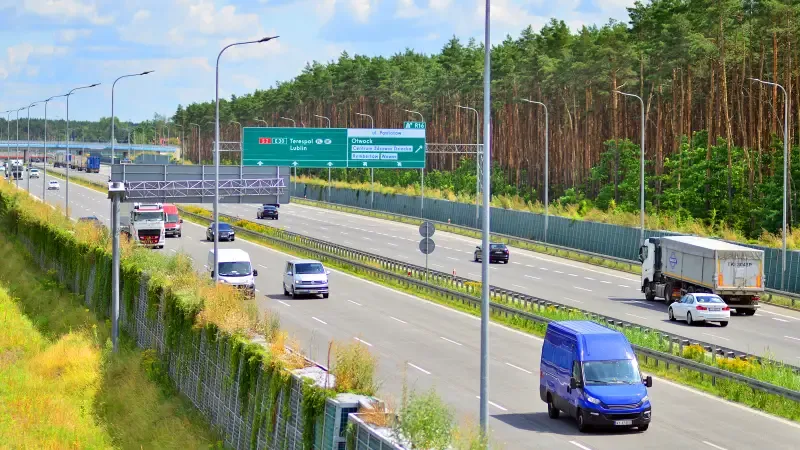
Toll roads in Poland
Poland’s toll system is a bit of a patchwork quilt—most is free, some is paid, and there’s no single sticker for it all. The golden rule? Expressways (marked with an "S") are always free for cars. Most Motorways (marked with an "A") are also free since 2023, but there are "concession" sections run by private companies where you have to pay.
- S roads: Free for everyone.
- State a roads: Free for cars and bikes.
- Private a roads: This is where you pay. Watch for toll gates on specific parts of the A1, A2, and A4.
If you’re a tourist or a business traveler using a rental, the 2026 rules are pretty simple: stay off the private stretches if you want to save money, or keep a credit card handy if you’re in a hurry.
Does Poland have toll roads?
Yes, but they aren't everywhere. Since 2023, the government made state motorways free for regular cars. The "e-TOLL" system you see advertised is really aimed at the "big guys"—trucks, buses, and anything over 3.5 tonnes.
However, if you're driving a heavy vehicle, things get serious. In February 2026, the network for heavy vehicles expanded significantly, requiring them to pay for some major roads. For a standard car, though? You only need to worry about the private toll booths.
Where are the main toll roads in Poland located?
The tolled sections are concentrated on three main motorways that connect Poland’s major cities from east to west and north to south:
A1 (Gdańsk – Toruń):
Operated by AmberOne, this is the main route to the seaside.
- The catch: While it's officially a toll road, the government sometimes suspends tolls during summer holidays to prevent traffic jams. Check before you go!
- Cost: Roughly 0.16 PLN per km, totaling about 29.90 PLN for the full stretch.
|
VEHICLE CATEGORY |
TOLL CHARGE IN PLN (EXCL. VAT) PER KILOMETRE |
MIN-MAX CHARGE IN PLN |
|
CATEGORY 1 (all vehicles with two axles, no dual wheels) |
0.16 |
FROM 3.5 TO 29.9 |
| CATEGORY 2 (all vehicles with two axles and dual wheels on at least one of them) | 0.38 | FROM 8.3 TO 71 |
| CATEGORY 3 (all vehicles with three axles and dual wheels on at least one of them) | 0.38 | FROM 8.3 TO 71 |
| CATEGORY 4 (all vehicles with more than three axles and dual wheels on at least one ax) | 0.38 | FROM 8.3 TO 71 |
| CATEGORY 5 (all vehicles which do not match any of the above Tolling Categories 1 - 4. Here come especially the non-standard vehicles defined in the Road Traffic Low (RTL)) | 10 × CLASS 1 RATE | FROM 34.8 TO 298.9 |
A2 (Świecko – Konin)
This is the "Autostrada Wielkopolska" connecting Germany to Central Poland. It is famously the most expensive road in the country.
- The cost: In 2026, a full trip from the border to Konin costs about 138 PLN.
- Note: Once you pass Konin heading toward Warsaw, the road becomes state-run and is free for cars.
|
VEHICLE CATEGORY |
MIN -MAX CHARGE IN PLN |
| CATEGORY 1 (all vehicles with two axles, no dual wheels) | FROM 0 TO 138 |
| CATEGORY 2 (all vehicles with two axles and dual wheels on at least one of them) | FROM 0 TO 247 |
| CATEGORY 3 (all vehicles with three axles and dual wheels on at least one of them) | FROM 0 TO 355 |
| CATEGORY 4 (all vehicles with more than three axles and dual wheels on at least one ax) | FROM 0 TO 520 |
| CATEGORY 5 (all vehicles which do not match any of the above Tolling Categories 1 - 4. Here come especially the non-standard vehicles defined in the Road Traffic Low (RTL)) | FROM 0 TO 1240 |
| CATEGORY 6 (all motorcycles) | FROM 0 TO 78 |
A4 (Katowice – Kraków)
Managed by Stalexport, this connects two of Poland's biggest hubs.
- The cost: As of April 2026, it costs 18 PLN at each of the two gates (Mysłowice and Balice), totaling 36 PLN.
- Pro Tip: Other parts of the A4 (like Wrocław to Gliwice) are free for cars, which is great news for rental drivers in the south.
| VEHICLE CATEGORY | TOLL CHARGE IN PLN (EXCL. VAT) | MIN -MAX CHARGE IN PLN |
| CATEGORY 1 (all motorcycles) | 9 | FROM 9 TO 18 |
| CATEGORY 1 (all vehicles with two axles, no dual wheels) | 18 | FROM 18 TO 36 |
| CATEGORY 2 (all vehicles with two axles and dual wheels on at least one of them) | 32 | FROM 32 TO 64 |
| CATEGORY 3 (all vehicles with three axles and dual wheels on at least one of them) | 32 | FROM 32 TO 64 |
| CATEGORY 4 (all vehicles with more than three axles and dual wheels on at least one ax) | 55 | FROM 55 TO 110 |
| CATEGORY 5 (all vehicles which do not match any of the above Tolling Categories 1 - 4. Here come especially the non-standard vehicles defined in the Road Traffic Low (RTL)) | 55 | FROM 55 TO 110 |
Each private concessionaire sets its own rates and decides which payment methods to accept. Since things can change, it's a smart move to check an up-to-date Poland toll roads map on the GDDKiA site or the specific operator's page before you head out.
While you're at it, take a look at Kaizen Rent’s travel guides and blog articles. They’re great for planning city stops and finding the best sightseeing spots along your route so you can make the most of your trip.
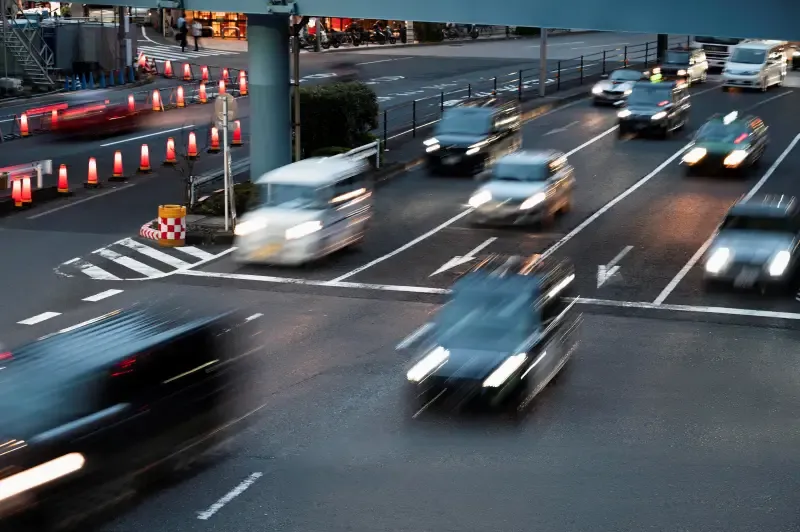
How do toll roads in Poland work for passenger cars?
If you are driving a car or motorcycle, you only pay on specific private motorways. Most of the time, the price is based on how far you drive or a flat rate at the gate. Here is how the two systems work:
Closed system (like the A2): You grab a ticket when you enter the motorway, keep it safe during the trip, and pay at the exit based on how many kilometers you actually covered.
Open system (like the A4): You simply pass through toll gates and pay a fixed fee at each plaza, no matter how short or long your drive was within that section.
Despite different rules across operators, the system remains simpler than many EU countries because no vignette and no on board units are required for typical tourist cars.
Toll road payment in Poland – how does it work in practice?
Depending on which road you’re on, your trip will look like one of two things: a quick "stop-and-pay" or a "ticket-to-exit" journey. Here is how it works:
1. The ticket system (e.g., A2 Świecko–Konin)
This is for the longer stretches where you pay by the kilometer.
- The Entrance: You’ll hit a barrier. Stop, press the button, and grab your paper ticket.
- The Rule of Gold: Do not lose that ticket! If you can’t produce it at the exit, the system assumes you drove the entire length of the motorway and will charge you the maximum possible price. Tuck it somewhere safe, like your sun visor.
- The Exit: When you’re ready to leave the motorway, you’ll hit another booth. Hand your ticket to the collector (or pop it into the machine), pay for the distance you actually covered, and you're free to go.
2. Direct payment (e.g., A4 Katowice–Kraków)
This is much simpler—no tickets, just a flat fee at the gate.
- The approach: Slow down as you get close to the big toll plazas. Look at the signs above the lanes; they’ll tell you which ones take cash, which take cards, and which are for automated apps.
- The transaction: Pull up, pay the fixed price shown on the screen, wait for the barrier to lift, and keep moving.
Can you pay by card or cash?
Yes. On Polish toll roads, you can pay by card (Visa or Mastercard) or in cash. Payments in Polish złoty (PLN) are always accepted, while euros may be accepted on some privately operated motorways, but this is not guaranteed. Card payment is usually the easiest and most reliable option for tourists.
How to pay:
Ticket system:
On some motorways, you take a ticket when entering and pay at the exit based on distance. Losing the ticket usually means paying the maximum possible fee.
Open system:
On certain sections, you pay a fixed fee at toll plazas without taking a ticket.
Payment methods:
- Cards (Visa, Mastercard) → fastest and most reliable
- Cash → accepted in PLN
- EUR → sometimes accepted on private motorways, but not guaranteed
The e-TOLL myth:
If you’re driving a standard passenger car (under 3.5 tonnes), you can mostly ignore the "e-TOLL" signs you see on the highway. As of 2026, the official e-TOLL system is mandatory only for "heavy" vehicles—meaning trucks, buses, and cars towing heavy trailers.
Tip:
While you don't need e-TOLL, using a private app like Autopay or AmberGO is still a game-changer. These apps use "videotolling" to read your license plate and open the barriers for you automatically. During the busy summer holiday season, these automated lanes can save you 30 minutes of sitting in line at the manual booths.
Just a heads-up: If you’re towing a large caravan or boat and your total weight goes over 3.5 tonnes, you officially become a "heavy vehicle" and will need to register with the e-TOLL system to avoid some very steep fines.
Is there a road toll app in Poland?
The official e toll system launched in 2021, replacing viaTOLL. It uses GNSS positioning for electronic toll collection across the motorway network.
However, e-toll is obligatory mainly for vehicles over 3.5 t (trucks, vehicle combinations, buses) on state toll roads. Passenger cars under 3.5 t normally do not need it in 2026.
Popular apps for light vehicles include:
- Autopay – works on A1, A2, A4, links vehicle registration number to payment card
- AmberGO – specifically for A1
- SkyCash, IKO – accepted on various toll motorway sections
These apps enable videotolling: cameras read your plate, barriers lift automatically, and toll fees are billed to your card.
What happens if you don’t pay on a toll road in Poland?
Don’t risk it: Why skipping the toll is a bad idea
Skipping a payment on a Polish motorway isn't just a minor slip-up—it can turn a cheap trip into a very expensive headache. Operators and Polish authorities are strict about enforcement, and the penalties are designed to be much higher than the standard toll fees.
- The “lost ticket” problem:
If you’re driving on a ticket-based motorway (like parts of the A2), you’ll get a ticket when entering and pay when exiting. Make sure you don’t lose it. If you do, you’ll usually be charged the maximum fee for that section, not just the distance you actually drove. - Fines and enforcement:
If you don’t pay the toll or ignore the system (for example, cameras or payment points), you can receive a fine. These are typically a few hundred złoty and can be issued even after your trip. In many cases, the registered vehicle owner will be contacted, including drivers from abroad. - If you’re driving a rental car:
If you’re using a Kaizen Rent car and don’t pay a toll, the rental company may receive the notice first. They will then pass the charge on to you, often adding an administrative fee. This amount is usually taken from the card you used for the rental.
How to use toll roads in Poland as a tourist or rental car driver
Whether you’re visiting from abroad or renting from Kaizen Rent, preparation makes toll roads straightforward, and drivers can easily check rules for renting with a foreign driver’s licence before arrival.
- Payment: Carry an international card (Visa/Mastercard) and some PLN cash as a backup. Contactless is best, but cash is handy for emergencies.
- Routing: Set your GPS to avoid tolls if you’re on a budget. Private roads (A1, A2, A4) are fast but expensive, with some sections costing over 130 PLN.
- Alerts: Enable toll notifications in your navigation app to avoid accidentally entering a paid section without a plan.
- Documentation: Keep all tickets and receipts until your rental is returned. They are your only proof if a dispute or "lost ticket" fee arises.
Are toll roads in Poland worth using?
For long-distance travel between major hubs like Warsaw, Kraków, Wrocław, and Gdańsk, motorways are indispensable. They offer significantly shorter travel times and a much higher standard of road quality compared to national roads. With enhanced safety features, modern rest areas and predictable arrival times, they are the preferred choice for most drivers.
However, the main trade-off is the cost. Private "concession" motorways are not cheap. While this may be a deterrent for budget-conscious travelers, most tourists and business professionals find the expense justified. Avoiding the stop-and-go traffic of smaller towns on parallel routes is often worth the price alone.
Driving on toll roads in Poland with Kaizen Rent – what should you know?
When you're behind the wheel of a Kaizen Rent car, remember that motorway tolls are your responsibility as the driver. These costs aren't included in your rental rate, so you'll need to handle them as you go.
FAQ – Toll roads in Poland explained
Are toll roads in Poland payable in euros?
PLN is the standard currency for all Polish tolls. While you can pay with Euro banknotes (not coins) on private motorways like the A1, A2, or A4, it is the most expensive option. Operators give change only in Polish złoty at unfavorable exchange rates, so it’s best to treat Euro as a last resort. For the best value, use a payment card or an automated app like Autopay.
Are toll roads included when renting a car in Poland?
Motorway tolls are generally not included in standard car rental prices, including rentals from Kaizen Rent. Drivers pay tolls directly on the route. Check your rental agreement and ask staff about how tolls and possible penalties are handled, referring also to Kaizen Rent rental regulations and fees.
Can I avoid toll roads when driving in Poland?
Yes. National and regional roads run roughly parallel to A1 A2 and A4, and all expressways (S roads) are free for cars under 3.5 t. Use the “avoid tolls” option in navigation apps. Non-motorway routes take longer and pass through towns with lower speed limits, which is worth considering when arranging car rental at Warsaw Modlin Airport for trips into the regions.
What is the difference between toll roads in Poland and free expressways?
In Poland, "S" expressways are always free. "A" motorways are free on state-managed sections, but you must pay on private "concession" stretches of the A1, A2, and A4. These private tolls apply to all motor vehicles, including motorcycles. For the best balance of speed and budget, "S" roads are your best bet.
Do I need any special documents or insurance to use toll roads in Poland?
Renting with Kaizen Rent means your registration and insurance are already handled. You won't need to buy road vignettes in Poland, though you'll still pay tolls on private A1, A2, and A4 stretches. Since Warsaw and Kraków now have Clean Transport Zones (SCT), just confirm at pickup that your car is registered for city center access to avoid any 2026 emission fines.
See similar articles

Comments (0) Show comments