
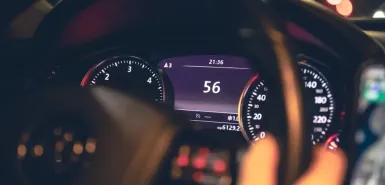
Speed limits in Poland – clear rules with Kaizen Rent
Getting around Poland behind the wheel is actually pretty chill once you get the hang of the road signs. Whether you're picking up a car from Kaizen Rent at the airport in Warsaw, Kraków, or Gdańsk, the rules are consistent across the country, but they do shift depending on exactly where you're driving.
Basically, the speed limit depends entirely on the type of road you're on - from tight city streets to those wide-open stretches of highway. But what are the actual speed limits in Poland, and how do they change as you move between urban areas and the countryside? To help you avoid any unwanted "souvenirs" in the form of tickets, here’s a quick, down-to-earth guide on how fast you can drive on highways and what exactly you should expect on different types of roads to keep your trip stress-free.
Key Takeaways
- Driving in Poland in 2026 is straightforward when you know how speed limits change between built-up areas, rural roads, expressways (S roads), and motorways (A roads).
- The main limits for passenger cars are: 50 km/h in built-up areas, 90 km/h outside towns, 100–120 km/h on expressways depending on carriageway type, and 140 km/h on motorways—speed limits in Poland for standard passenger cars and motorcycles range from 20 km/h in residential zones to 140 km/h on motorways.
- Signs Overrule General Rules: Limits are shown in km/h on circular, red-bordered signs and always take priority. However, these limits don't last forever. In Poland, they are typically cancelled by the next intersection (excluding driveways or dirt roads), an "End of Limit" sign (white/grey with diagonal lines), or a town boundary sign. Just remember - if the limit is marked as a "Zone," it stays in effect until you see the specific "End of Zone" sign, regardless of any intersections you pass.
- Fixed speed cameras and Polish police checks are common; fines for tourists can be issued on the spot or later via rental companies. Exceeding the limit by over 50 km/h can cost you your driving licence.
- When driving a Kaizen Rent car, the driver is responsible for observing speed limits and paying any tickets. Using GPS alerts and slowing automatically for towns is strongly recommended.
What are the standard speed limits in Poland?
If you’re hopping into a rental car in Poland this year, the speed limits are pretty easy to follow, but the enforcement has become much stricter as of March 3, 2026.
Here is the standard breakdown for passenger cars and small vans when you don't see any other signs:
Built-up areas
The standard limit is 50 km/h around the clock. You’ll know you’ve entered this zone when you see the white rectangular sign with a black city skyline; once you see that same sign with a red diagonal line, you’re back on the open road. If you find yourself in a strictly residential zone (marked with a blue sign showing a house and a pedestrian), slow down to 20 km/h—pedestrians have the right of way everywhere there.
Roads outside built-up areas
Once you’re out of the city but not yet on a highway, the default is 90 km/h. These are usually single-lane roads where you should watch for signs dropping the limit to 70 or 50 km/h near sharp turns or intersections.
Expressways (S roads)
These are high-standard roads marked with a white car on a blue background. If it's a dual-carriageway (the most common type), you can go 120 km/h. On the rare sections where it’s only a single lane, the limit is 100 km/h.
Motorways (A roads)
This is where Poland has one of the highest limits in Europe: 140 km/h. You’ll see this on major routes like the A1, A2, and A4. However, keep in mind that lower limits of 120, 110, or even 80 km/h are frequently posted on certain stretches. Additionally, when approaching toll booths, the limit typically drops significantly, often down to 50 km/h.
Just a quick heads-up: as of this year, the police are much stricter. Exceeding the limit by more than 50 km/h—even on a highway—now leads to an automatic three-month license suspension. Stick to the limits and keep an eye out for the yellow speed cameras!
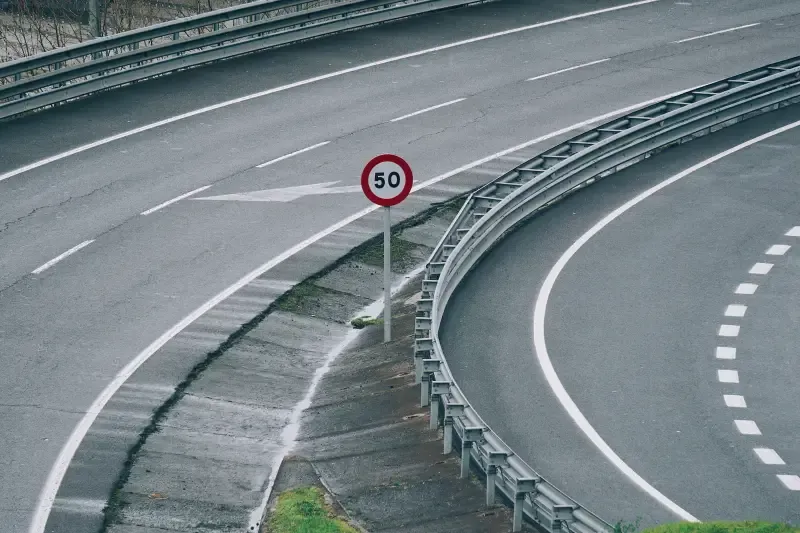
How do speed limits change depending on road type?
Think of the speed rules in Poland as a "common sense" scale: the more unpredictable the surroundings, the lower the limit. To help you visualize this, we’ve summarized the key rules into a quick-reference table. It follows a simple logic: in residential areas where pedestrians are everywhere, you move at a crawl; as you transition to main city streets, then open rural roads, and finally to massive, divided highways where pedestrians and tractors are banned, the speed steadily climbs.
What are the standard speed limits in Poland?
If you’re hopping into a rental car in Poland this year, the speed limits are pretty easy to follow, but enforcement has become much stricter as of March 3, 2026. Here is the standard breakdown for passenger cars and small vans when no other signs are present:
| Road Type | Typical Limit | Common additional restrictions | Characteristics |
| Built-up areas | 50 km/h | 40 km/h, 30 km/h, 20 km/h | Towns, cities, pedestrian crossings, shops |
| Rural roads | 90 km/h | 70 km/h, 50 km/h | Single carriageway connecting villages. Most often, restrictions occur before intersections, sharp bends, dangerous sections, pedestrian crossings and bus stops. |
| Dual carriageway (non-express) | 100 km/h | Central separation, no express status | |
| Expressways (single) | 100 km/h | S roads with one lane each way | |
| Expressways (dual) | 120 km/h | S roads with two lanes each direction | |
| Motorways | 140 km/h | A roads, full access control |
The roads in Poland have come a long way over the last twenty years. Today, you'll find a really modern network of motorways and expressways that make hopping between major cities a breeze.
If you’re taking a Kaizen Rent car on a classic route - like heading from Warsaw up to the coast in Gdańsk or driving south from Kraków toward the mountains in Zakopane - you’ll notice the road type changes pretty frequently. You might start on a fast-paced highway, then transition to a winding rural road as you get closer to your destination. It’s all about adapting your speed as the scenery shifts, which actually makes a weekend road trip itineraries feel like a bit of an adventure. Just keep an eye on the signs as you go from the "express" stretches back into the local towns, and you'll have a great drive.
How do speed limit signs in Poland work?
In Poland, speed signs are pretty standard for Europe, but there are a few local quirks that are easy to miss. If you're driving a rental, here is how to read the road like a local:
The Standard Signs
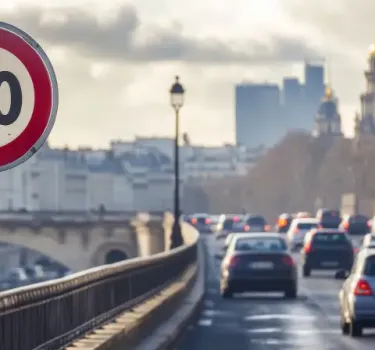
The main speed sign (the B-33) is a white circle with a red border and a black number. That number is your absolute maximum in km/h. It stays in effect until you hit a different speed sign or a white circle with grey diagonal stripes—that "ghost" sign means the specific restriction is over and you go back to the default speed for that type of road.
Construction and Electronic Signs
In work zones, you’ll see the same red-bordered signs, but they’re often on a bright yellow background. Even if they look temporary or are just standing on the shoulder, they are 100% legally binding. On the big motorways, keep an eye on the LED screens hanging over the lanes. They can change the limit instantly if there’s a traffic jam, fog, or ice ahead. If the screen says 100, that’s the rule, even if the road is usually a 140.'

When does a speed limit end? A simple guide for drivers in Poland
When you’re driving in Poland, speed limits aren’t “forever” — they stay in force only until something clearly changes them. The most obvious reset is a new speed limit sign: if you see a different number, the new limit replaces the old one straight away.
A limit can also be cancelled by a dedicated sign, such as “End of speed limit” (the same number with diagonal stripes), or the “End of all prohibitions” sign (a white circle crossed with several black diagonal lines), which wipes out certain restrictions shown earlier — including speed limits.
It’s also worth remembering that, in many cases, a speed limit set by a sign applies up to the next junction unless it’s repeated. However, if you enter a speed limit zone (a zone sign showing a number), that limit continues through junctions until you see the end-of-zone sign.
Finally, keep an eye on built-up area signs: entering or leaving a built-up area can mean the rules revert to the general limits for that type of road — unless signs tell you otherwise. When in doubt, follow the latest sign you’ve passed.
The "intersection" trick
This is the one that trips up most visitors: in Poland, an intersection usually cancels the previous speed limit, resetting it to the default unless a new sign appears. These rules reflect the latest Polish regulations and stricter fines. To make your trip even easier, most cars at Kaizen Rent feature traffic sign recognition, displaying the current limit directly on your dashboard to help you stay compliant effortlessly.
Are there any unusual speed limit rules?
Beyond the standard highway speeds, Poland has a few unique rules that can catch you off guard if you aren't prepared.
Specific vehicle limits
Not every vehicle follows the same speed rules. If you're driving something other than a standard passenger car, your limits might be lower:
- Cars with trailers: These are usually capped at 70–80 km/h on open roads.
- Buses: These typically range between 80–100 km/h depending on the road type.
- Vehicles over 3.5 tonnes: These have a maximum of 80 km/h even on motorways.
Special Zones
- Residential Zones: Look for the blue rectangular signs. These "strefa zamieszkania" areas have a strict 20 km/h limit, and pedestrians always have priority. Be careful, as speed bumps here are often unmarked.
- School and Pedestrian Zones: Many city centers now have 30 km/h limits, often paired with raised crossings to slow things down.
Weather and conditions
If visibility drops due to snow, heavy rain, or fog, Polish law expects you to adjust your speed manually. This means you might need to drive well below the posted limit to stay safe. These rules are a big part of the responsible driving culture that companies like Kaizen Rent encourage.
Other requirements
- Lights: You must drive with your headlights on 24 hours a day.
- Child Safety: Anyone under 150 cm must be in a proper child seat or restraint.
- Alcohol: The legal blood alcohol limit is extremely low at 0.02%, so it’s best to avoid drinking entirely if you're driving.
- Fuel: You won't have trouble finding energy for your vehicle; the network of petrol stations is excellent, and the number of electric vehicle charging points is rapidly growing, with many locations open 24/7 along major routes.
- Speeding Penalties: Exceeding the speed limit by more than 50 km/h (now also on single-carriageway roads outside built-up areas) results in an immediate 3-month license suspension. For foreign drivers, police issue a temporary certificate allowing them to drive only for the next 72 hours.
- Speedometer Tolerance & Fines: While speed cameras in Poland often have a technical tolerance of up to 10 km/h to account for device calibration, this is not a legal "buffer". In fact, according to the current 2026 tariff, police officers can issue a fine and 1 penalty point for exceeding the limit by even less than 10 km/h. It’s always safer to stick to the exact limit shown on your dashboard, as even a small margin can be the difference between a safe stop and an accident—or an unnecessary fine.
- Minimum Speed: On motorways, vehicles must be capable of reaching and maintaining a minimum speed of 40 km/h (unless traffic conditions dictate otherwise).
- New Driver Limits: If you are a young driver (on a probationary period), you face stricter limits: 100 km/h on motorways and 80 km/h outside built-up areas, regardless of the standard posted limits.
How can you drive in Poland without breaking speed limits?
For travelers using a Kaizen Rent vehicle for the first time, these tips make driving in Poland simple and stress-free. As long as you follow the speed limits and keep your headlights on 24/7, you’re set for a smooth trip. To make things even easier, new cars at Kaizen Rent come standard with automatic daytime running lights, so you don't have to worry about manually switching them on or off. For more road trip inspiration or local driving advice, be sure to check out the Kaizen Rent travel and tips blog.
To stay safe and avoid fines in your rental, keep these habits in mind:
Keep your eyes on the signs: Always be on the lookout for the white town entry signs. They signal a sharp drop to 50 km/h, and because the buildings don't always start right at the sign, it's easy to miss the change until you see a speed camera. To help you catch these transitions, most Kaizen Rent cars are equipped with traffic sign recognition, which identifies these signs and displays the current limit on your dashboard.
Let GPS help you out: Using a navigation app with speed alerts is a lifesaver, but don't follow it blindly. Maps can sometimes lag behind new roadworks or recent limit changes, so use the app as a backup to what you see through the windshield.
Drive defensively: Get into the habit of easing off the gas whenever you see a village, school, or pedestrian crossing ahead. While Poland’s road safety has improved significantly over the years, the accident rate is still slightly above the European average, so staying alert at junctions is always a smart move.
Understand camera enforcement
Don't rely solely on your GPS to spot cameras. While fixed speed cameras are usually preceded by blue warning signs (look for "Fotoradar"), the Polish police are very active with:
- Unmarked Patrol Cars: They look like regular sedans but are equipped with high-tech video recorders.
- Handheld Radar: You’ll often see officers in high-visibility vests near the entrance of villages or on highway overpasses.
- Section Control: These systems measure your average speed between two points. If you speed and then slow down right before the camera, it won’t save you.
Just like you wouldn’t choose a car solely based on price without checking the quality—whether you're looking at Kaizen Rent’s premium rental fleet or their used car sales—you shouldn't gamble your trip on spotting every camera.
What happens if you exceed speed limits in Poland?
Poland has tightened its speeding penalties in recent years to improve road safety. Fines increase depending on how much you exceed the speed limit, and they can rise quickly for more serious offences.
- Up to 10 km/h over the limit: small fine (around 50 PLN)
- 11–20 km/h over: typically 100–200 PLN
- 21–30 km/h over: around 300–400 PLN
- 31–40 km/h over: around 800 PLN
- 41–50 km/h over: around 1,000 PLN
- 51–60 km/h over: around 1,500 PLN
- 61–70 km/h over: around 2,000 PLN
- Over 70 km/h: up to 2,500 PLN
For higher violations, penalty points are added to your driving record, with the most serious offences receiving the highest number of points. Accumulating too many points can lead to further consequences, including licence suspension.
The biggest update for 2026 is that exceeding the limit by more than 50 km/h anywhere (not just in towns) now triggers an automatic 3-month license suspension. This is why business travelers using Kaizen Rent solutions are encouraged to stick strictly to the limits—the financial and legal risks simply aren't worth it.
Driving in Poland with a Rental Car
When picking up a car at Warsaw, Kraków, or Gdańsk airports, keep in mind that the driver named in the rental agreement is legally responsible for all traffic violations. Whether it’s a speed camera or a roadside fine, you are on the hook for both the ticket and any administrative fees from Kaizen Rent. Following the limits is the easiest way to keep your trip stress-free and budget-friendly. This applies whether you’re driving in a car in Poland for a day trip or a longer journey, and it’s equally important to understand how renting a car with a foreign driver’s license in Poland works.
Practical requirements
- Driving with your physical driving license is required in Poland, while electronic forms are accepted only for Polish citizens
- To rent a car in Poland, you must be at least 18 years old, although some rental companies may set a higher minimum age requirement and charge a surcharge for drivers under 25
- When renting a car in Poland, it is advisable to check the rental company’s specific rules and requirements, as these can vary significantly between companies
Rental agencies in Poland are plentiful in larger cities and near international airports, making it convenient for travellers to rent a car upon arrival and choose from a wide fleet of modern rental cars across vehicle classes.
Fleet advantages
Choosing a car with modern driver assistance from the Kaizen Rent fleet—like cruise control, a speed limiter, or traffic sign recognition—makes staying within the limits much easier. These features act as an extra set of eyes, helping you drive safely and avoid unexpected fines throughout your entire trip, especially if you opt for long-term van or commercial vehicle rental for business or moving needs.
FAQ – speed limits in Poland
Do I need to switch my Rental Car’s speedometer from mph to km/h in Poland?
Most Kaizen Rent vehicles on the Polish market show speed primarily in km/h. Drivers from countries using mph (UK, USA) should double-check the units on the instrument cluster and infotainment settings before leaving the rental station. Navigation systems normally display limits and current speed in km/h to match Polish signs.
Are speed limits in Poland different at night or on weekends?
The former distinction between day and night limits in built-up areas has been removed, so the same posted or general limits in Poland apply 24 hours a day.
Although the legal numbers don’t change at night or on Sundays, enforcement can become stricter in areas with nightlife or frequent accidents.
Can I use cruise control to keep the right speed in Poland?
Using cruise control or a speed limiter is allowed and helpful on long stretches of expressway or motorway. Many vehicles registered in Europe include this feature.
How do I know when a built-up area starts and ends?
The start-of-town sign is a rectangular white board with the locality’s name in black, sometimes with a stylised skyline symbol. Built-up area rules apply from that point.
The end-of-town sign shows the same name crossed with a red diagonal line, signalling a return to general out-of-town limits unless another sign is present. Pay special attention on national roads passing through small villages.
Where can I find more information about driving in Europe with a Kaizen Rent Car?
If you’re planning a trip that crosses borders—like a road trip from Poland into Germany or the Czech Republic—it’s a good idea to check out our guide on speed limits in Europe. Each country has its own nuances, and knowing how the rules change the moment you cross the border will keep your journey smooth.
For everything else related to driving in Poland—from how to use parking meters and pay tolls to the specifics of child seats and mandatory car equipment like fire extinguishers—our complete guide to driving in Poland is your best resource. Contact Kaizen Rent customer support before departure if you’re unsure about cross-border travel or specific regulations, or check our rules on renting a car abroad and cross-border travel with Kaizen Rent.
See similar articles
Comments (0) Show comments