

10 day Poland itinerary – how to explore Poland by car?
A 10-day Poland itinerary allows you enough time to see more than one side of the country. You can combine historic cities, mountain views, seaside towns, lakes, castles, local food and quieter regional stops without rushing from one train station to another every day.
Poland works especially well as a car holiday destination because the most interesting places are spread across different regions. Kraków, Warsaw, Gdańsk, Wrocław, the Tatra Mountains, Masuria, and the Baltic coast each offer a different travel experience – and with a rental car, you can connect them into one flexible route.
Below, you’ll find an inspiring 10 day Poland itinerary by car, with ideas for where to start, where to finish, how many days you need in Poland, which places to visit and how Kaizen Rent can make the trip easier if you want to collect a car at one airport and return it in another city.
Quick answers – 10 day Poland itinerary
- A clear, logical route runs Kraków → Zakopane/Pieniny → Wrocław → Warsaw → Toruń/Łódź → Gdańsk & Baltic coast, covering Poland's best cities and diverse landscapes in 10 days.
- A rental car from Kaizen Rent keeps the whole trip flexible and Poland cheap to explore - most Polish roads are free for passenger cars, with tolls only on certain motorway sections (A4 Katowice–Kraków and A1 Toruń–Gdańsk).
- Kaizen Rent offers easy airport pick-up and one-way rentals, so you can collect a car in Kraków and drop it off in Gdańsk or Warsaw without backtracking.
- Ten days is enough for first time visitors to see Poland's popular cities and a taste of nature, but adding extra days opens up more castles, lakes and national parks.
- The best time to visit Poland for a road trip is late spring through early autumn - May to early October - when days are long, weather is mild, and roads are less crowded outside peak weekends.
Is 10 days enough to visit Poland?
Ten days is enough for a well-balanced introduction to Poland - especially with a car - but it will not cover everything the country offers. Think of it as a "greatest hits" tour rather than an exhaustive one.
With seven days, you could see Kraków, one nature stop, and Warsaw - tight, but doable. With 10 days, you add Wrocław, a mid-route city like Toruń, and two full days on the Baltic coast. With 14 days, you could layer in the Masurian Lake District, Malbork Castle, Białowieża Forest, or more time hiking in the Tatra Mountains.
The driving distances between key stops keep each day manageable:
| Segment | Distance | Approximate driving time |
| Kraków → Zakopane | ~105 km | 1 h 40 min |
| Zakopane → Wrocław | ~370 km | 4–5 h |
| Wrocław → Warsaw | ~350 km | 3.5–4 h |
| Warsaw → Toruń | ~215 km | 2.5–3 h |
| Toruń → Gdańsk | ~260 km | 3–3.5 h |
Poland is compact enough for this plan, so no day turns into a gruelling cross-country marathon. If you want more day trips - Auschwitz-Birkenau, Wieliczka Salt Mine, extra Baltic coast towns - simply add a day or two. The country is still relatively affordable, so stretching a trip to Poland by a few nights does not break the bank.
What is the best 10 day Poland itinerary by car?
The strongest 10 day Poland itinerary by car starts in the south, in Kraków, and ends on the Baltic coast in Gdańsk. This direction works well because international flights to Kraków are plentiful, the scenery builds from mountains to lowlands to sea, and a one-way car hire from Kaizen Rent means you never retrace your steps.
Day-by-day overview:
- Days 1–2: Kraków - old town, Wawel Royal Castle, Kazimierz, Podgórze
- Day 3: Zakopane (Tatra Mountains) or Pieniny - mountains, wooden architecture, nature
- Days 4–5: Wrocław & Lower Silesia - colourful streets, Cathedral Island, castles
- Day 6: Warsaw - modern capital city, museums, green spaces along the Vistula River
- Day 7: Toruń or Łódź - a slower stop between regions
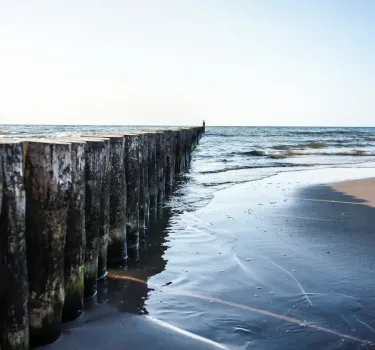
- Days 8–9: Gdańsk, Sopot & Baltic coast - maritime heritage, sandy beaches, seafood
- Day 10: Return the car, fly home - or extend
Use the A4 between Kraków and Wrocław, the S8/A2 corridor towards Warsaw, and the A1 from Toruń to Gdańsk. Traffic can be heavier on summer weekends and public holidays, especially on the road to Zakopane.
Most roads are free for passenger cars. However, there are toll gates on the A4 Katowice–Kraków section (around PLN 36 for a standard car — PLN 18 at each of the two toll plazas) and electronic tolls on A1 Toruń–Gdańsk. Budget roughly PLN 65–70 for tolls over the whole trip.
You can swap Toruń for Łódź if you prefer post-industrial creativity over medieval brick, add a detour to the Masurian Lake District if you have an extra day, or extend the Baltic coast leg towards Hel Peninsula or Łeba.
Where should you start a 10-day Poland holiday with Kaizen Rent?
Southern Poland - specifically Kraków - is the most practical starting point. The city has excellent international flight connections, a compact historic centre that is easy to enjoy on foot, and direct access to the A4 motorway heading west towards Wrocław or south towards the Tatra Mountains.
Kaizen Rent has convenient pick-up points at Kraków Balice Airport and in the city centre, so you can collect the car as soon as you land or the next morning after a car-free first evening exploring Kazimierz.
If flights to Kraków are expensive on your dates, consider starting in Warsaw or Wrocław. The route adjusts easily - for example, a Warsaw → Kraków → Wrocław → Gdańsk loop still covers the same highlights.
Tip for your first night: stay near the old town or Kazimierz without a car, then pick up the vehicle the next morning from a Kaizen Rent branch. This avoids driving tired after a flight and saves one night of city-centre parking fees.
Kaizen Rent serves both leisure travellers and business guests, which is useful if you are combining a work trip with a Polish adventure.
Can you return a rental car in a different Polish city?
Yes. Kaizen Rent allows one-way rentals within Poland. You can pick up a car in Kraków and drop it off in Gdańsk, Warsaw, Wrocław, or any other city where Kaizen Rent has a branch - the company operates over 30 locations nationwide, including all major airports.
A drop-off fee may apply depending on the locations and dates, and this is shown during the online booking process so there are no surprises. The cost is small compared to the time and fuel you save by not driving back to where you started.
Practical examples:
- Kraków Airport pick-up → Gdańsk Airport drop-off after finishing the Baltic coast section.
- Warsaw city office pick-up → Kraków drop-off if you prefer a south-focused itinerary ending near the mountains.
Returning the car in another city eliminates one full day of backtracking - especially valuable for families or first time visitors who would rather spend that day sightseeing. Book early in high season (June–September) to secure your preferred car category and pick-up/drop-off combination.
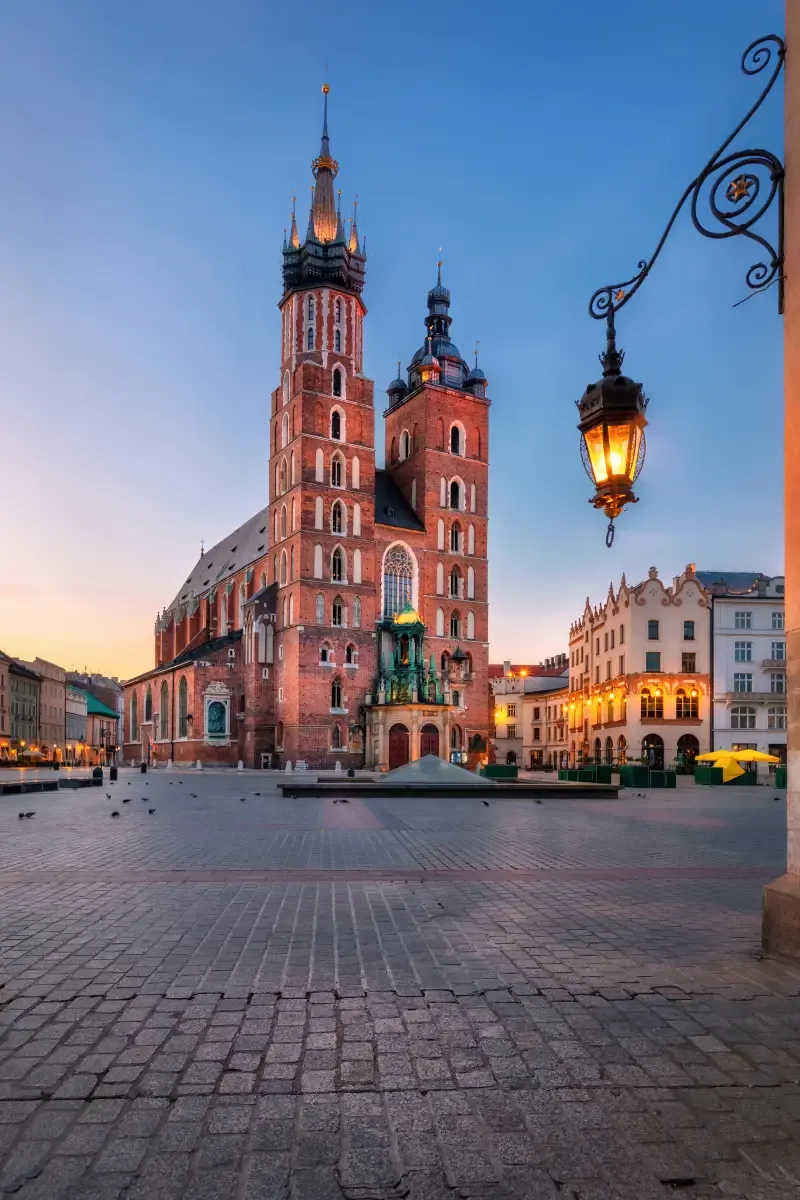
Days 1–2: Kraków – history, food and the easiest start in southern Poland
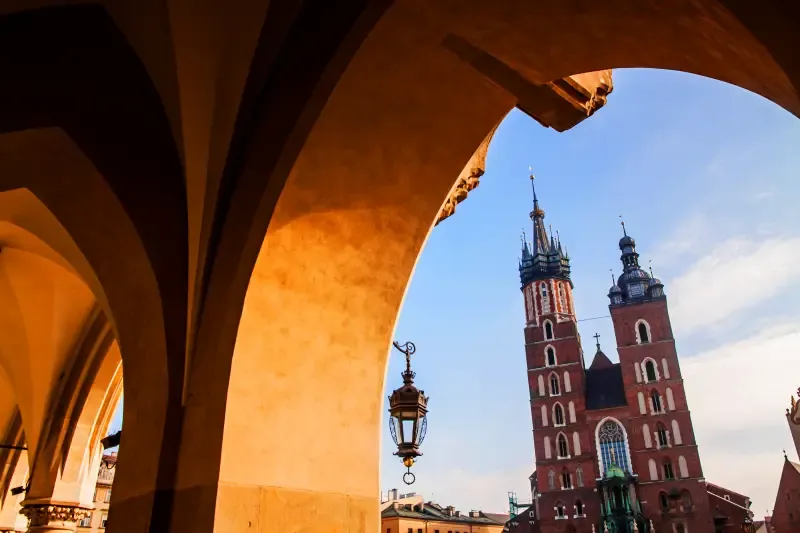
Kraków served as Poland's royal capital for over five centuries, and its old town survived the Second World War largely intact - unlike Warsaw, which was nearly levelled. The Main Market Square is one of the largest medieval market squares in Europe, and the entire area is a UNESCO World Heritage Site.
Free or low-cost highlights:
- Main Market Square - the Cloth Hall, street performers, café terraces
- St. Mary's Basilica trumpet call - played live every hour from the tower, a tradition dating back to the medieval world of the 13th century
- Planty Park - a green belt circling the old town, perfect for walking
- Wawel Hill - stroll the castle courtyards and admire the Royal Castle exterior and the Wawel dragon sculpture
- Kazimierz - the former Jewish quarter, rich in the history of Jewish life and Polish Jews, and filming location for Schindler's List
- Podgórze & Krakus Mound - sunset views over the city
For parking, leave the car at P+R Czerwone Maki or Krowodrza Górka and take a tram into the centre. Cobblestone streets and pedestrian zones make the old town best explored on foot.
If you have time for a structured day trip, visit the Wieliczka Salt Mine (about 30 minutes by car from the centre) or the Auschwitz-Birkenau Memorial (about 70 minutes). Both require advance ticket booking, especially in summer.
An interesting fact: Wawel Hill is connected to a legend about a fire-breathing dragon - you can still see a bronze dragon statue that breathes real fire every few minutes. For a deeper look at the city, read the Kaizen Rent guide to exploring Kraków.
Day 3: Zakopane, Pieniny or Ojców – a nature escape from Kraków
On day 3, leave Kraków for a short nature escape. You have three options depending on your interests and energy level.
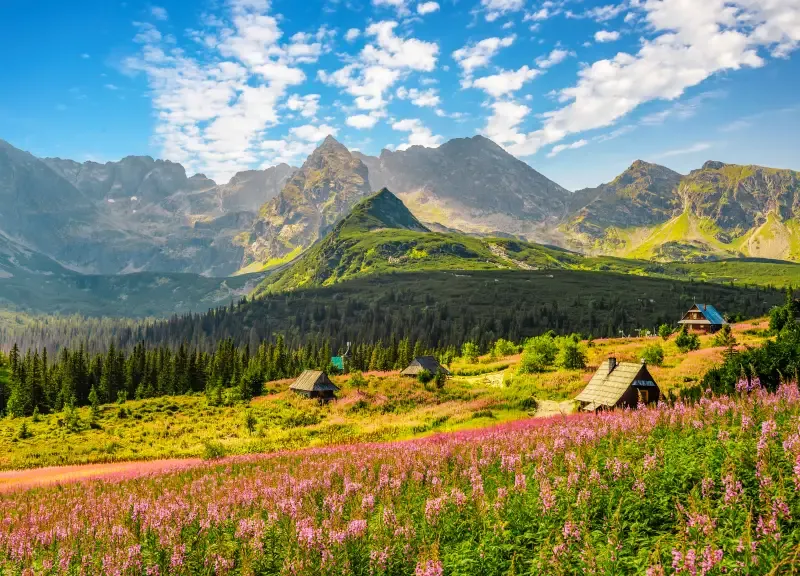
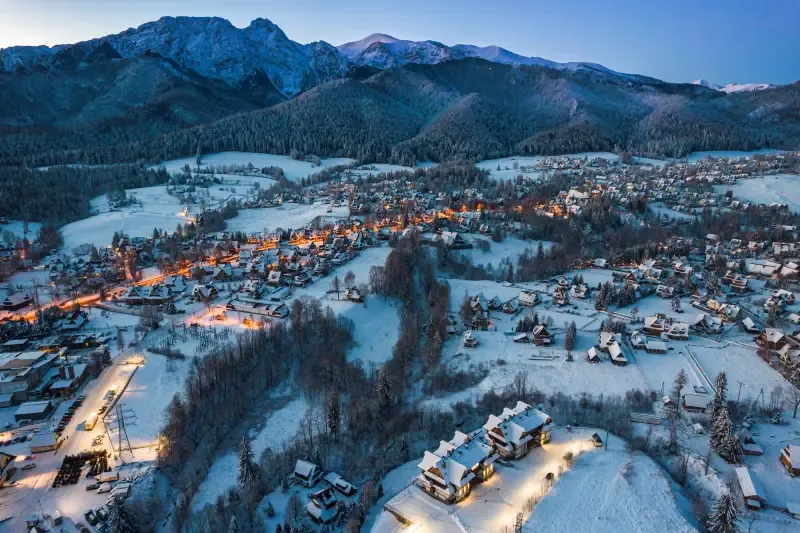
- Zakopane & the Tatra Mountains
Drive south early via the Zakopianka road (DK47) - about 1 hour 40 minutes from Kraków. Park in municipal paid lots near the centre, then stroll the Krupówki promenade and Rówień Krupowa meadow. For panoramic mountain views, take the Gubałówka funicular - interestingly, it was only the second funicular railway ever built in Poland. Nature lovers can add a gentle valley walk such as Dolina Kościeliska or Dolina Chochołowska (2–3 hours round trip, family-friendly). The Tatra Mountains are part of a national park, so entry tickets are required at trailheads.
- Pieniny National Park
Drive east from Kraków to Szczawnica or Krościenko (about 1.5/2 hours). The traditional wooden raft trip through the Dunajec Gorge is the highlight - a leisurely float between towering limestone cliffs. Combine it with a short walk to Trzy Korony peak or visit the ruins of Czorsztyn Castle overlooking the lake.
- Ojców National Park
The closest option, only 30 minutes north of Kraków. Limestone cliffs, the Hercules' Club rock formation, Ojców Castle ruins, and the Renaissance castle at Pieskowa Skała - all connected by short walking trails. Ideal if you prefer less driving and a relaxed afternoon before heading to Wrocław the next morning.
Days 4–5: Wrocław and Lower Silesia – castles, colourful streets and relaxed sightseeing
Wrocław is one of Poland's best cities for a city break - a beautiful city built across 12 islands and connected by over 100 bridges. The drive from Kraków or the Tatra region along the A4 takes roughly 3–4 hours, with the option to stop in Opole or at small castles along the way.
Day one - Wrocław centre:
- Market Square (Rynek) - one of Poland's largest, dating back to the 13th century, framed by colourful townhouses and the Gothic Town Hall Tower
- Ostrów Tumski (Cathedral Island) - the oldest part of the city, atmospheric at dusk when gas lamps are lit by hand
- Odra riverfront - stroll along the promenades and cross the bridges
- Dwarf trail - Wrocław hides over 1040 (as of July 2026) small bronze dwarf statues around town, a quirky treasure hunt that children especially enjoy
Day two - Lower Silesia day trip:
Drive to Książ Castle near Wałbrzych (one of Poland's largest castles, about an hour from Wrocław), visit the UNESCO-listed Peace Church in Świdnica, or continue to the Karkonosze Mountains for fresh air in Karpacz or Szklarska Poręba.
For parking, use P+R options like Dworzec Grabiszyn, leave the car, and hop on a tram to the vibrant market square area. Most attractions in the old town are within easy walking distance of one another.
Day 6: Warsaw – modern capital, museums, and a change of pace
Warsaw offers a deliberate contrast to Kraków and Wrocław. This is a capital city of contradictions - glass skyscrapers next to post-war reconstruction, a UNESCO-listed Warsaw old town that was rebuilt almost brick by brick after German forces destroyed over 85% of the city during World War II and the Nazi occupation. Walking its streets, you would never guess that nearly every building is a reconstruction - a tribute to one of history's darkest chapters and the determination to recover from it.
Drive from Wrocław along the S8 in about 3.5–4 hours, starting early to maximise your time.
Key free sights:
- Old Town Square & Castle Square - the heart of the rebuilt Warsaw old town
- Royal Route - from Castle Square past St. Anne's Church, historic palaces and churches, all the way to Royal Łazienki Park
- Łazienki Park - the Palace on the Water, peacocks on the lawns, green spaces for a picnic
- Saxon Garden - Poland's oldest public park
- Vistula Boulevards - modern waterfront promenades ideal for an evening stroll
Museums worth considering: the Warsaw Rising Museum (covering the 1944 uprising against Nazi occupation), POLIN Museum of the History of Polish Jews (documenting centuries of Jewish life in Poland), and the viewing terrace at the Palace of Culture and Science.
Park at P+R Metro Młociny or Stokłosy and switch to the metro or trams. Central paid parking zones are available but can fill up on weekdays.
Day 7: Toruń or Łódź – a slower stop between regions
Day 7 breaks the journey between Warsaw and the Baltic coast. Choose between two very different cities - both worth visiting and both easy to explore in a single relaxed day.
- Toruń - a UNESCO World Heritage medieval old town on the Vistula River. Gothic brick churches, leaning towers, and the birthplace of Nicolaus Copernicus. Toruń is also famous for its gingerbread - the Living Museum of Gingerbread lets you bake your own. Walk the cobblestone streets of the old market square, see the Town Hall, and visit the Kępa Bazarowa viewpoint across the river for the best panorama. Park near Plac św. Katarzyny or beneath the Centre of Contemporary Art. The drive from Warsaw takes about 2.5–3 hours; from Toruń to Gdańsk, another 3 hours via the A1.
- Łódź - Poland's fourth-largest city and a symbol of urban regeneration. Piotrkowska Street is one of Europe's longest commercial streets, lined with art-nouveau facades, street art murals, and the creative hub OFF Piotrkowska. Manufaktura - a former textile factory - is now a massive complex of shops, restaurants and museums. Łódź is closer to Warsaw (about 1.5 hours) and suits fans of design, film, and post-industrial atmosphere. Park on Targowa Street or Rewolucji 1905 Street.
How to choose: Toruń for history buffs who love compact medieval centres and river views. Łódź for those drawn to street art, diverse cities, and creative energy. Both connect smoothly to the next leg of your road trip towards the coast.
Days 8–9: Gdańsk, Sopot and the Baltic coast
Gdańsk is where World War II began - the first shots were fired at Westerplatte on 1 September 1939. Decades later, it became the birthplace of the Solidarity movement that helped end Communist rule. Today it is a very popular destination with a beautifully rebuilt beautiful old town, maritime heritage, and the amber museum showcasing the Baltic's signature gem.
- Day one - Gdańsk Main Town:
Walk the Royal Route along Ulica Długa and Długi Targ, where Gdańsk's Old Town features Gothic and Hanseatic architecture, see the Neptune Fountain, explore the Motława waterfront with its iconic medieval Crane, and duck into side streets to find St. Mary's Church - one of the largest brick churches in the world. Visit at least one major museum: the Museum of the Second World War or the European Solidarity Centre, both powerful and moving. Pre-book tickets in peak season.
- Day two - Sopot, beaches and optional Malbork:
Park at P+R Gdańsk Ujeścisko or Łostowice-Świętokrzyska, or the seasonal Eko car park near ERGO ARENA when combining Gdańsk and Sopot. In Sopot, walk down Monte Cassino Street to the famous wooden pier, enjoy sandy beaches, and soak in the laid-back Baltic coast atmosphere. In summer, continue along the coast towards Brzeźno, Jelitkowo, or smaller seaside towns.
Alternatively, use the second day for a day trip to Malbork Castle - one of the largest Gothic fortresses in the world and a popular destination for anyone interested in the rich history of the Teutonic Knights. It is about an hour's drive from Gdańsk and worth visiting even on a tight schedule.
Day 10: Return the car and fly home – or extend the trip
The final day is typically reserved for returning the car at a Kaizen Rent office - Gdańsk Airport, Warsaw Chopin Airport, or whichever branch suits your flight. The benefit of flexible drop-off locations is that you do not waste a full day driving back to where you started.
Use any remaining hours for a last stroll through the Gdańsk old town, a quick visit to a beach, or a relaxed breakfast in a café before driving to the airport and refuelling the car.
Thinking of extending? Consider adding:
- The Masurian Lake District - sailing, kayaking, and lakeside villages
- Białowieża Forest - Europe's last primeval woodland and home to wild European bison
- Extra time in the Tatra Mountains - longer hikes, Slovak border villages
- More Baltic coast - Hel Peninsula, Łeba dunes, Słowiński National Park
Before returning the car, check the rental agreement for fuel policy, return condition, and drop-off time. Allow extra time for airport security, particularly in high season. Kaizen Rent's flexible daily and longer-term rental options make it easy to adjust if you decide to stay a little longer.
10 places to visit in Poland during a longer trip
If 10 days leaves you wanting more - and it usually does - here are additional destinations for a return trip or an extended Poland itinerary. A car makes reaching these hidden gems far easier than relying on train travel alone.
| Place | Main attraction | Best for |
| Masurian Lake District (Mikołajki, Giżycko) | Sailing, kayaking between interconnected lakes | Families, nature lovers, water-sport fans |
| Poznań | Old Market Square with mechanical goats that butt heads at noon and at 3 pm from the Town Hall; the Croissant Museum | History buffs, foodies |
| Lublin | Renaissance old town, multicultural heritage, gateway to eastern Poland | Culture seekers, those looking beyond popular cities |
| Białowieża Forest | Europe's last lowland primeval forest, free-roaming European bison | Wildlife enthusiasts, hikers |
| Bieszczady Mountains | Remote trails, wooden churches, wild nature | Adventurous hikers, solitude seekers |
| Szczecin | Haken Terraces, harbour views, parks | Architecture fans, those heading to/from Germany |
| Łeba & Słowiński National Park | Shifting sand dunes on the Baltic coast | Families, photographers, beach lovers |
| Kazimierz Dolny | Picturesque Vistula River town, art galleries, Renaissance charm | Couples, weekend trippers |
| Białystok & Podlasie | Branicki Palace, Tatar heritage villages, green countryside | Travellers wanting Poland's quieter east |
| Zamość | The Old Town with the Great Market Square and the Renaissance Town Hall | World heritage lovers |
Each of these places can be slotted into a longer road trip - some as overnight stops, others as comfortable day trips from other cities on the main route. Many are small towns or regions that rarely appear on rushed itineraries but rank among travellers' favourite places once discovered. The country offers far more than its most popular cities, and a car is the best way to prove it.
For more inspiration on castles, palaces and UNESCO sites, see the Masurian Lakes guide and the broader list of beautiful places in Poland.
Car rental in Poland – how Kaizen Rent supports a 10-day itinerary
A flexible, reliable rental car is the foundation of a smooth 10 day Poland itinerary. Kaizen Rent is a nationwide car rental partner with over 30 branches - city offices, airport counters, and much more meet-and-greet points - covering every major destination on this route.
The fleet includes more than 4,500 modern vehicles: economy hatchbacks, mid-size sedans, hybrids, SUVs, vans, and 7-seater minibuses. Whether you are travelling solo, as a couple, or as a family with luggage and child seats, there is a category that fits.
Key services for tourists:
- Online booking with transparent pricing - daily rates start from PLN 38/day for basic economy cars
- Additional protection packages and auto replacement (OC)
- Airport and city pick-up/drop-off in Kraków, Warsaw, Gdańsk, Wrocław, Poznań and other cities
- One-way rentals so you can build point-to-point road trips without backtracking
- Car rental by the day, week or month
Poland drives on the right. Road standards are good and improving, signage is clear, and most navigation apps work reliably. For foreign visitors, driving here is straightforward - less stressful than many Western European capitals. Left-hand-drive vehicles, well-maintained expressways, and helpful service stations along the way make a car-based Poland trip accessible to almost anyone.
What type of car should you choose for a 10 day Poland itinerary?
- Couples or solo travellers mostly visiting cities and a few countryside spots: choose a compact hatchback (e.g. Toyota Yaris). Easier to park in old town areas, cheaper on fuel.
- Families or small groups with more luggage: mid-size sedans, estate cars, or 7-seater vans. More comfort on longer motorway stretches like the A4 and A1.
- Winter travel or remote nature areas: an SUV or crossover with higher ground clearance. Useful if you plan to visit mountain roads around Zakopane or gravel tracks near lakes and forests.
Kaizen Rent can also supply automatic transmission vehicles, GPS, child seats, and additional driver options - all especially useful on a longer road trip. Book your preferred category early for peak periods such as July–August and long weekends, when demand from both tourists and local renters is high.
What should you know before driving around Poland for 10 days?
Poland's road network is modernising rapidly. The motorway and expressway system now covers the main corridors between polish cities, but drivers should still be prepared for local roads, weather changes, and city parking rules.
Speed limits (standard):
| Road type | Limit |
| Built-up areas | 50 km/h |
| Non-urban single carriageway | 90 km/h |
| Expressways (dual carriageway) | 100–120 km/h |
| Motorways | 140 km/h |
Always check current regulations and local signs. For a full breakdown, see the Kaizen Rent guide to driving in Poland.
Key Traffic Laws: Seatbelts are mandatory for all passengers, and Poland enforces a strict near-zero tolerance policy for drink-driving (the legal limit is strictly 0.2‰ BAC, so it is best to avoid alcohol entirely before driving).
Documentation: You need a valid driving licence. EU licences are widely accepted, but some non-EU visitors may require an International Driving Permit (IDP). Always carry your passport or national ID card, along with your rental agreement, in the vehicle at all times.
Parking in cities: Most historic city centres operate paid parking zones during business hours and weekends. Using P+R (Park and Ride) systems in major cities like Kraków, Warsaw, Wrocław, and Gdańsk is a great way to save money and avoid navigating tight, historic streets. Never leave valuables visible inside the car.
Alternative Transport: While renting a car gives you ultimate flexibility for scenic detours, Poland's rail network is reliable
Fuel: petrol and diesel stations are frequent along motorways and in cities; less so on remote country roads. Hybrids are available in the Kaizen Rent fleet if you want better fuel economy. EV charging infrastructure is growing but still concentrated in urban centres. Plan fuel stops accordingly, and budget for roughly 2,500–3,000 km of total driving if you follow the full itinerary.
For more on rental insurance costs and what to expect as a foreign visitor renting a car, Kaizen Rent's detailed guides cover everything you need.
FAQ – 10 day Poland road trip itinerary
Is a 10 day Poland itinerary suitable for families with children?
Absolutely. The route is family-friendly with reasonable driving days - most stretches are under three hours. Every stop on the itinerary includes parks, open spaces, and attractions that appeal to children: Wrocław's dwarf hunt, Sopot Beach, the Gubałówka funicular in Zakopane, and interactive museums in Warsaw and Gdańsk. If you extend the trip, boat rides in the Masurian Lake District are a highlight for younger travellers. Kaizen Rent offers child car seats on request, so you do not need to carry them on the plane.
What is the best season for a 10-day holiday in Poland by car?
The best time to visit is late spring (May–June) or early autumn (September–early October). Temperatures are pleasant, days are long, and crowds at major sites like Wawel Royal Castle or Malbork Castle are thinner. July and August bring warmer weather and lively beach resorts on the Baltic coast, but also higher prices and heavier traffic - especially on the road to Zakopane. Winter road trips are possible but require more preparation: winter tyres, shorter daylight hours, and potential mountain road closures. Winter is best for travellers interested in Zakopane skiing or Christmas markets in Kraków and Wrocław.
Can you add Slovakia, Czechia, or Germany to a Poland road trip?
In principle, yes - Poland shares borders with several other countries in the European Union. Southern Poland connects easily to Slovakia's Tatra region, and Wrocław is not far from Prague or Dresden. However, you must check in advance whether cross-border rental is allowed in your specific Kaizen Rent contract and what extra fees may apply.
Is it better to book attractions in advance during a 10-day Poland holiday?
For timed-entry attractions, yes - book early, especially in peak season. This includes Auschwitz-Birkenau, Wieliczka Salt Mine, Malbork Castle, the Museum of the Second World War in Gdańsk, and the Warsaw Rising Museum on weekends. Many outdoor sights - old towns, parks, Baltic coast beaches, viewpoints - need no booking at all, giving you flexibility for spontaneous stops along the road trip.
Is it better to book attractions in advance during a 10-day Poland holiday?
Yes, booking in advance is highly recommended, especially for major sites like the Auschwitz-Birkenau Memorial and the Wieliczka Salt Mine, where entry slots often sell out weeks ahead during the peak summer season. Even for natural attractions like Morskie Oko in the Tatra National Park, you are required to book your parking voucher online in advance, as on-site sales have been discontinued. By pre-booking your tickets and parking, you ensure a stress-free 10-day road trip, allowing you to move seamlessly between destinations without wasting precious time waiting in queues.
What kind of accommodation works best for a 10-day Poland holiday by car?
In cities (Kraków, Wrocław, Warsaw, Gdańsk), look for centrally located hotels or apartments with on-site or nearby parking. This minimises daily driving and lets you walk the old town areas in the evening. For countryside segments - the Tatra foothills, Pieniny, or a lake region detour - guesthouses, agritourism farms, or lakeside lodges work well. Parking is usually free and straightforward outside the big cities, and prices are noticeably lower than in city centres.
Can you rent child car seats from Kaizen Rent for a family road trip in Poland?
Yes. Kaizen Rent can provide child seats and booster seats for different age groups as additional equipment. Reserve them during the booking process to guarantee availability, especially in summer. Using appropriate child restraints is required by Polish law for children under 150 cm tall, and renting seats locally is far more convenient than bringing them on a plane - particularly for families flying into Kraków, Warsaw or Gdańsk to begin their trip to Poland.
See similar articles

Comments (0) Show comments