
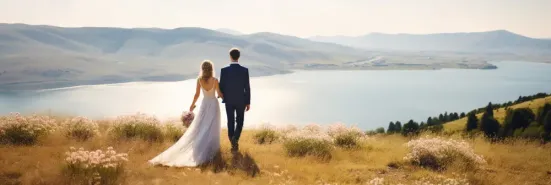
Polish Wedding – traditions, venues, and what to expect as a guest
A Polish wedding is not just a ceremony – it’s a full-day (and often full-night) celebration built around tradition, food, music, and shared moments. Whether you’re attending for the first time or planning one yourself, it helps to know what makes Polish weddings unique.
In this article, you will learn:
- What are Polish traditions?
- What are modern weddings like in Poland?
- What should a wedding guest wear? And which colours are off-limits?
- Why are weddings in Poland so special?
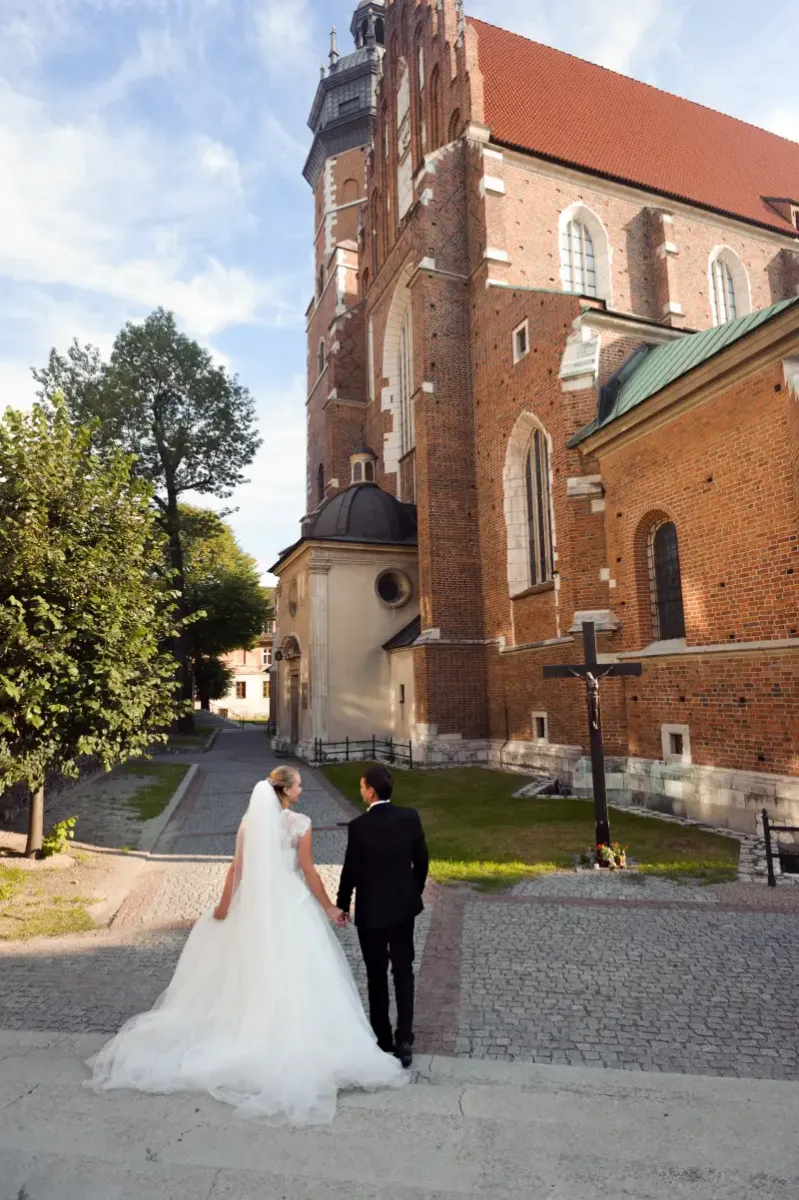
What is a Polish wedding like?
You’ve probably heard about Polish weddings – the food, partying till the early hours and often the fact that the celebrations last up to 2 days. Many foreigners who have been to a Polish wedding are surprised by the scale and intensity of the whole thing. It’s not just about the ceremony itself but the whole experience – full of emotions, tradition and energy.
Many visitors from abroad say what impresses them the most is the amount of food on the tables. Expecting just a few dishes they soon discover that a Polish wedding is a full - blown feast – the tables are loaded with all sorts of delicacies and hot food is served till the early hours of the morning.
Equally surprising is the ‘poprawiny’, or the second day of celebrations – for many foreigners, the very idea of continuing the festivities after dancing all night seems hard to imagine. The presence of alcohol also catches the eye; it is often available in large quantities and without restriction, which differs significantly from customs in other countries.
What are typical Polish wedding traditions?
Traditional Polish wedding starts with a formal ceremony which can take many forms – most often it’s a church wedding in the afternoon but more and more couples are choosing a civil wedding. Ceremonies outdoors are also becoming more popular, held in the fresh air which gives the whole event a more free and romantic character. Polish traditions are still alive in the memory of the newlyweds and play an important role during the wedding. Many couples can’t imagine the day without such elements as rice throwing, joint toast, first dance, cake cutting or oczepiny. What’s interesting is that not many people know that many of these customs have very distant roots – going back to ancient times, especially to the ancient Rome.
Let’s take a look at some of the typical traditional wedding customs in Poland.
Parents’ blessing
Polish traditions are deeply rooted in the spiritual sphere. As a Catholic country, we place a great emphasis on religious elements at a wedding, even if among the young people there is a decline in religiosity. One of these customs is the blessing of the parents, which is still practiced by many young couples.
In Polish culture it’s done most often at the home of the bride, where the newlyweds kneel down in front of the parents and ask for the blessing for the new life path. Sometimes the grandparents or godparents participate in it. In different regions there are gestures accompanying this, like the sign of the cross drawn on the bride and groom’s foreheads. or using holy water.
The bride’s ransom
Polish traditions vary from region to region – a good example is the bride’s ransom, which is particularly popular in Silesia, though it is also practised in other parts of the country. This custom involves the groom symbolically ‘ransoming’ the bride by visiting her home on the wedding day.
The bride-buying ceremony is usually led by the witnesses and takes the form of a light-hearted auction, during which the groom must ‘pay’ for his future wife – sometimes with money, and sometimes with small gifts or jewellery. It also happens that gifts are given to the future in-laws, which is intended to further emphasise the good relations between the families. This custom dates back to times when marriages also had an economic and familial dimension. Today, it serves mainly as a humorous and symbolic introduction to the ceremony.
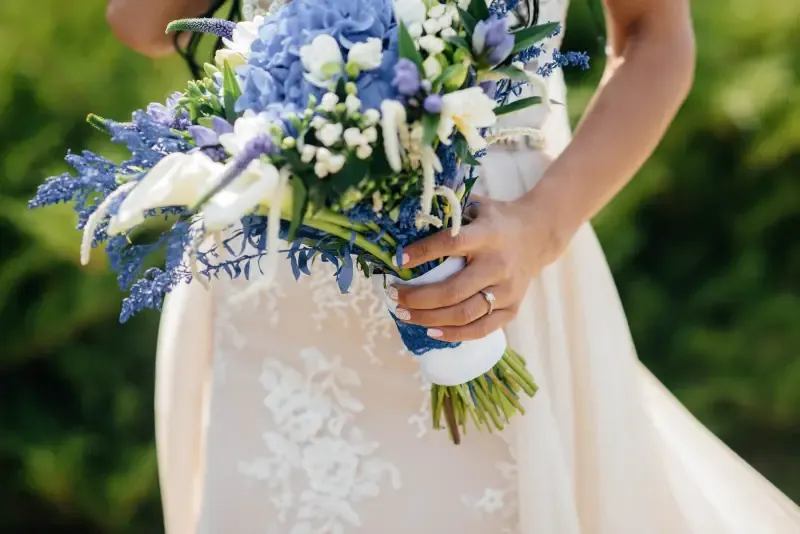
Something blue
Polish wedding traditions are often intended to ensure the newlyweds’ happiness and the longevity of their marriage. One of the best-known customs is the ‘four items’ that the bride should carry with her: something old, something new, something borrowed and something blue. “Something blue” signifies love, fidelity and prosperity.
Wedding gates
Wedding gates are one of those that still warm hearts at Polish weddings like the flame of tradition! In days gone by, when the bride and groom lived close to one another, neighbours and acquaintances would stop the groom’s procession, demanding a ‘ransom’ – usually in the form of alcohol – in exchange for permission to continue on to his beloved. Today, the gates usually stop the couple on their way to the church, creating a fairytale adventure full of surprises!
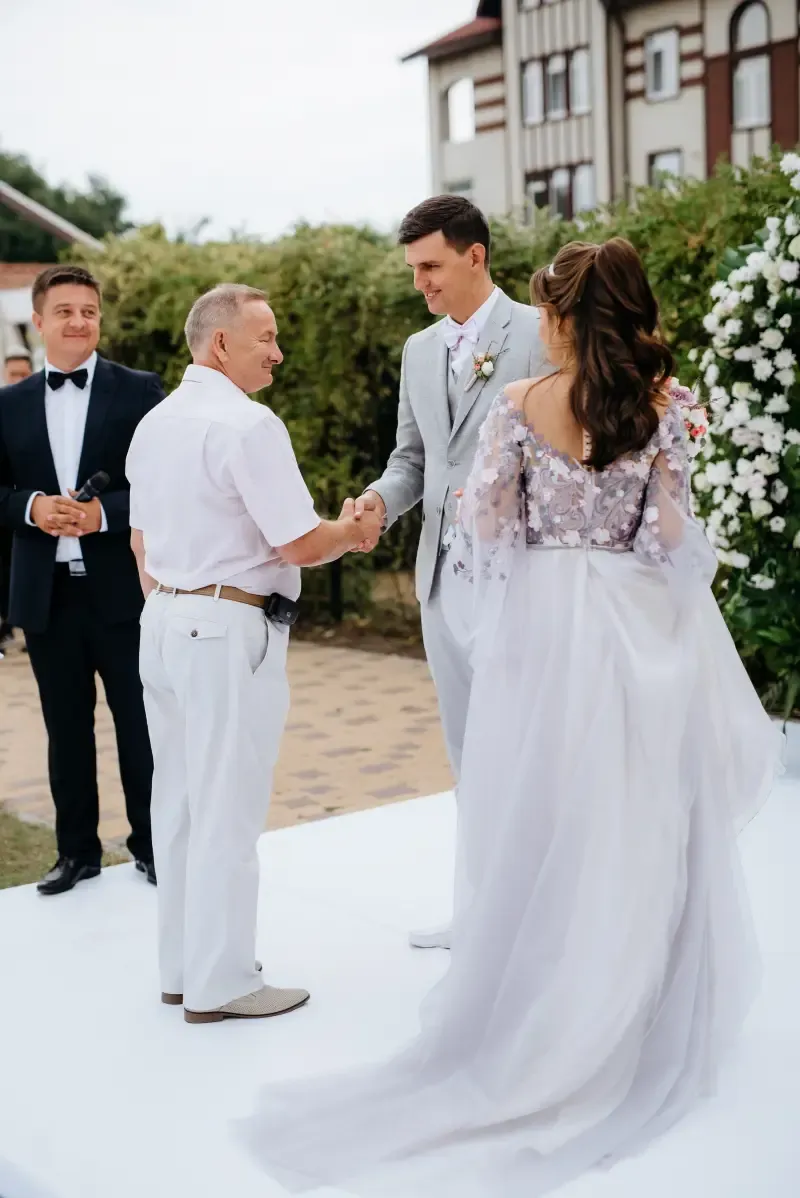
he entrance to the church – the bride accompanied by her father
When planning a wedding, couples often meticulously organise every detail of this special occasion, including the truly moving moment of entering the church. In the case of a church wedding, it is becoming an extremely important and increasingly popular tradition for the bride to be escorted by her father – a moment that takes everyone’s breath away! In many regions of Poland, a more traditional approach is still observed, whereby the bride and groom enter the church together or are led to the altar by the priest, preserving the authentic Polish spirit of the ceremony.
Bread and salt welcome
The traditional bread and salt ceremony at Polish wedding receptions symbolizes the couple’s hope for prosperity and the ability to cope with life’s difficulties; the couple takes a bite of bread and sprinkles salt as part of this ritual. During the reception, the couple participates in a ritual where they each choose between a glass of vodka and a glass of water; the one who picks vodka is believed to be the dominant partner in the relationship. These two shot glasses represent more than just a fun game – they’re a traditional moment that gets other guests cheering.
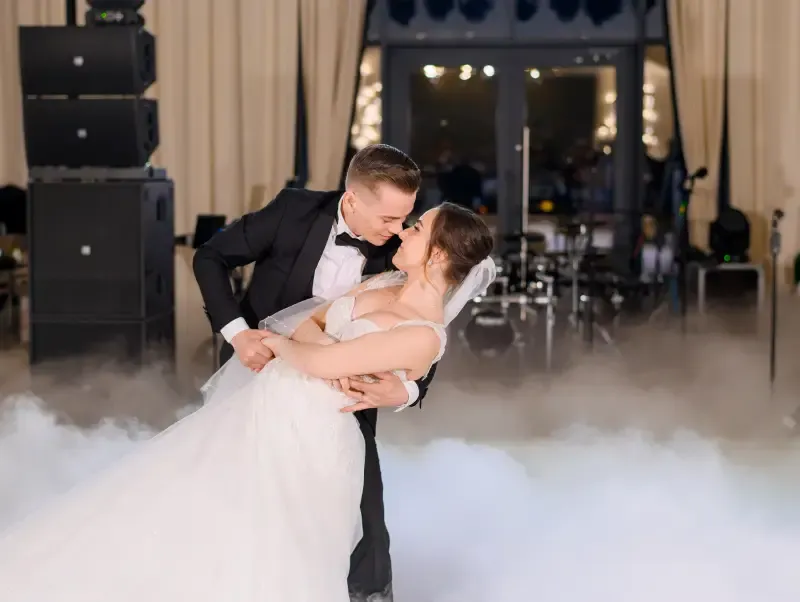
First dance at the wedding reception
A traditional Polish wedding would not be complete without that magical moment when the bride and groom perform their first dance – a moment that makes time stand still in awe! In keeping with tradition, the newlyweds take to the dance floor, whilst the guests gather around them like a circle of good spirits to admire this long-awaited, heart-pounding moment. Couples usually opt for the English or Viennese waltz, though some choose a slower, more relaxed ‘close-held’ dance, which makes the world spin solely around their love. Many couples decide to take dance lessons beforehand, often preparing a short routine tailored to their abilities, so that this moment shines like a diamond!
Oczepiny ceremony
The ‘oczepiny’ ceremony, taking place around midnight, is like a magical rhythm marking the hour of transformation! It is one of the most eagerly awaited parts of the reception, featuring a series of games and activities for the guests, which over time have become increasingly creative, like a blossoming garden of ingenuity. It is a common tradition for the bride to throw her veil and for the groom to throw his tie or bow tie. The guests try to catch them – the idea is that whoever catches a particular item is next in line to walk down the aisle, as if fate itself were choosing the future happy couple!
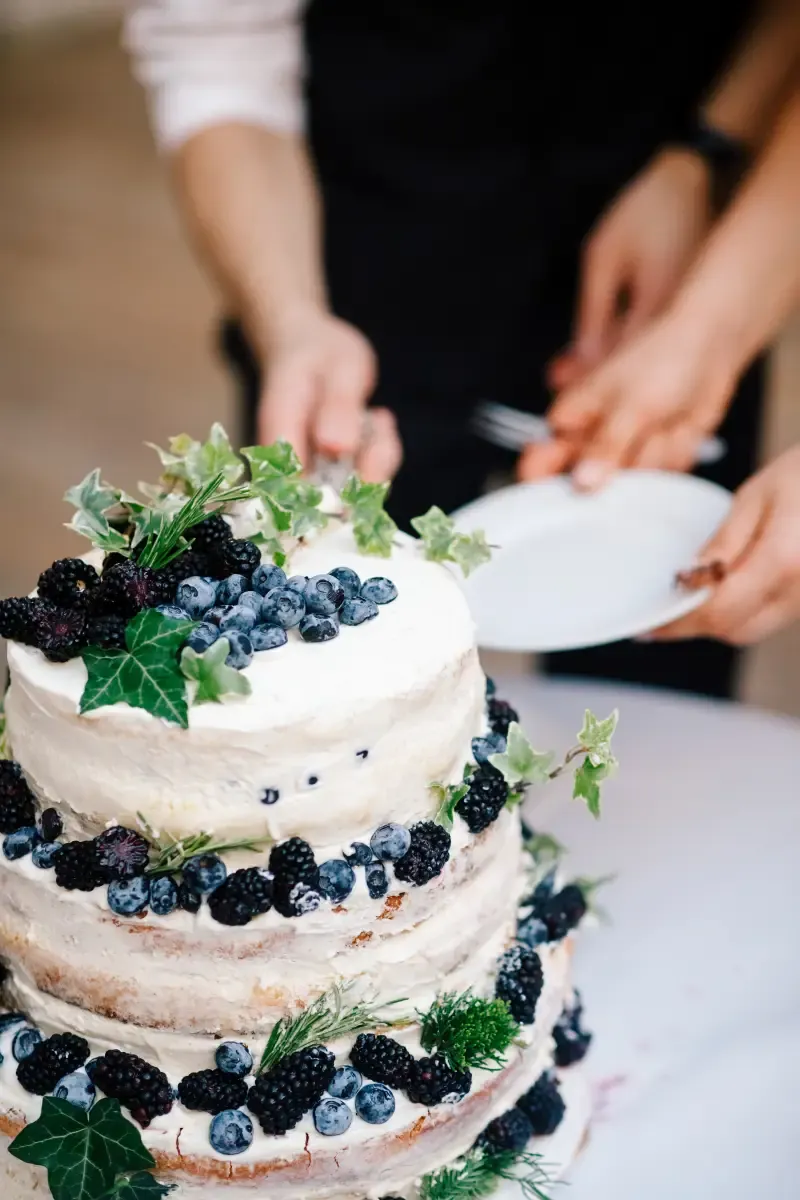
Cutting the wedding cake together
In Polish wedding tradition, the wedding cake is an indispensable element. It is usually cut by the couple just before midnight, often with the lights dimmed and special effects such as sparklers, creating a truly magical atmosphere. The newlyweds hold the knife together and cut the first slice, which traditionally belongs to them, as if they were sharing the first taste of their life together. Nowadays, wedding cakes often take on creative forms, sometimes even as individual portions, and are frequently designed to match the wedding’s colour scheme.
Poprawiny – the second wedding day
Polish weddings very often include a second day of celebrations, known as the ‘poprawiny’, which serve as a natural continuation of the main wedding reception. In practice, the after-party can take various forms – from a more informal get-together around a barbecue or a shared table, to further dancing, which often lasts until the early hours. However, these are not always as lavish events as the wedding itself – much depends on family traditions and the style of the entire celebration. The after-party is, above all, a time for relaxed conversations, catching up with guests and continuing the celebrations in a less formal atmosphere. For many people, this is when they can truly enjoy the event without the pressure of the official wedding day schedule.
How do modern Polish wedding traditions differ today?
Modern Polish wedding traditions differ from older ones mainly in terms of organisation, form, and overall approach to celebration. Today’s weddings are more flexible, personalised, and focused on the comfort of the bride and groom as well as their guests.
In the past, weddings had a very local and communal character – often the whole village would take part in the celebration. Receptions were held in barns, private homes or village community halls, and guests would bring food and cakes themselves. The celebrations were lively, informal, and could last until dawn, sometimes even for several days.
Today, weddings are much more structured and professionally organised. They usually take place in wedding venues, hotels or dedicated event spaces, with catering, music and decorations provided by professional services. Instead of collective preparation, everything is carefully planned and delivered as a complete package.
Wedding traditions themselves have also changed in character. Customs such as oczepiny, bridal ransom games or wedding gates are now mostly symbolic or entertainment-based. Many couples choose to modify or even skip certain traditions altogether, creating a more personalised wedding experience.
What is the Polish wedding dress code?
The dress code for a Polish wedding is generally flexible rather than strictly defined, but it is strongly influenced by the setting, the style of the celebration, and sometimes even the chosen colour theme. Formal church weddings and traditional receptions usually call for more elegant attire
What should you wear to a Polish wedding as a guest?
As a guest, it is best to be guided primarily by the style and overall character of the celebration, which is often defined in advance by the bride and groom. More and more weddings today follow a cohesive theme or a suggested colour palette, helping guests align their outfits with the overall aesthetic of the event.
Men typically opt for well-tailored suits, while women choose elegant dresses suited to the venue and the atmosphere of the occasion. The key is to maintain a sense of balance – the outfit should be formal and elegant, yet never overshadow the bride and groom, who remain the centre of attention on the day.
At the same time, there are certain guidelines that are worth following.
What should you avoid at a Polish wedding party?
| An item of clothing | Why should you avoid? |
| White, ivory, very light beige | Colours reserved for the bride |
| All-black outfits | They may be too formal or evoke a sense of mourning (unless they are stylishly offset) |
| Jeans | Not suitable for a formal occasion |
| Trainers | Too casual for a formal occasion |
| Bright, garish colours (e.g. bright red) | They might distract attention from the bride and groom |
| Mismatched accessories for men (e.g. bow tie/tie) | Choosing the wrong formal accessories may not suit the style of the wedding; often, a bow tie or tie is suggested by the groom’s style or the dress code |
Where are the most popular Polish Wedding venues?
The most popular wedding venues in Poland are scattered across the country, but there are a few regions that are particularly popular with couples – mainly due to their atmosphere, scenery and the unique character of the venues. It is worth noting, however, that couples are increasingly opting for venues located some distance from the wedding ceremony venue, which significantly increases the logistical challenges of organising the wedding.
It is also often necessary to transport decorations, products or other items required for the wedding preparations. Renting 7- or 9-seater buses is also becoming an increasingly popular option, as they make it easier to transport smaller groups of guests between the church or registry office and the wedding venue.
Such vehicles can be hired from car hire companies such as Kaizen Rent, allowing you to tailor transport flexibly to the needs of the event.
Palace and castle wedding venues in Poland
Poland offers many stunning palace and castle wedding venues, combining history, romance, and breathtaking scenery.
- Lower Silesia (Valley of Palaces and Gardens)
A region famous for beautifully restored castles and aristocratic estates, often surrounded by mountains and historic parks. - Moszna Castle
One of the most iconic castles in Poland, known for its fairy-tale appearance with multiple towers and striking architecture. - Masuria (Mazury) – Zamek Ryn
A unique lakeside castle where weddings take place in historic courtyards with scenic water views. - Pałac Mała Wieś (near Warsaw)
An elegant palace combining classic architecture, landscaped gardens, and modern wedding facilities. - Manowce Palace (West Pomerania)
A secluded waterfront estate surrounded by forests and water, offering privacy and an intimate atmosphere. - Wawel Royal Castle (Kraków)
One of Poland’s most important historical landmarks, adding a royal and symbolic character to special ceremonies.
These venues are highly sought after for their unique atmosphere, blending heritage, nature, and elegance to create unforgettable wedding experiences.
Rustic and countryside wedding venues
Rustic and countryside weddings in Poland are becoming increasingly popular among couples who dream of a natural, relaxed atmosphere surrounded by greenery, open space, and a touch of tradition. These venues often combine simplicity with charm, creating a warm and intimate setting for the celebration.
- Mazury (Masurian Lake District)
A peaceful region filled with lakes, forests, and countryside resorts – ideal for relaxed, nature-inspired weddings. - Podhale & Zakopane surroundings
Mountain views, wooden chalets, and traditional highlander style create a warm, rustic atmosphere. Zakopane - Podlasie countryside
Known for its untouched nature, wooden architecture, and quiet rural landscapes perfect for intimate celebrations. - Kujawy and Greater Poland rural estates
Charming manor houses and farm-style venues surrounded by fields and gardens, offering a classic countryside feel. - Silesian countryside barns and agritourism venues
Restored barns and farm estates that combine rustic charm with modern wedding comfort. - Pomeranian countryside near the coast
Rural venues close to the Baltic Sea, blending seaside air with peaceful village surroundings.
These locations are especially popular for couples who want a natural, relaxed atmosphere with plenty of greenery and a more informal wedding style.
Wedding venues by the water (Lakes and seaside)
Waterfront wedding venues in Poland are a dream choice for couples looking for a romantic atmosphere, natural beauty, and unforgettable views. From peaceful lakeside resorts to sandy Baltic beaches, these locations offer a unique backdrop for both ceremonies and receptions.
- Masurian Lake District (Mazury)
A top destination for lakeside weddings, surrounded by forests, marinas, and quiet resorts – perfect for a relaxed, nature-filled celebration. - Śniardwy and Mamry lakes area
The largest lakes in Poland, offering spacious resorts and scenic waterfront venues ideal for larger weddings. - Baltic Sea coast (Pomerania)
Beachfront venues in towns like Sopot, Gdańsk, and Kołobrzeg, where ceremonies often take place with sea views and sunset backdrops. - Sopot seaside venues
Elegant hotels and terraces overlooking the beach, combining seaside charm with urban sophistication. Sopot - Gdańsk waterfront locations
Historic riverside and maritime-inspired venues with a unique mix of tradition and modern style. Gdańsk - Lake resorts near Warsaw (e.g. Zegrze Reservoir)
Popular for quick escapes from the city, offering convenient yet scenic lakeside wedding settings.
These venues are especially loved for their calming atmosphere, natural light, and stunning photo opportunities, making them some of the most picturesque wedding locations in Poland.
Modern and glamour wedding venues
Modern and glamour-style wedding venues in Poland are all about elegance, luxury, and a striking “wow effect”. They combine stylish interiors, high-end service, and often spectacular city or architectural views – creating a truly unforgettable atmosphere for the celebration.
- Luxury hotels in major cities
In cities like Warsaw, Kraków or Wrocław, couples often choose five-star hotels with elegant ballrooms, rooftop terraces and full wedding service packages, offering a seamless and sophisticated experience. Warszawa Kraków - Historic luxury hotels with modern interiors
Venues such as Raffles Europejski or Hotel Bristol in Warsaw combine heritage architecture with contemporary luxury design, perfect for glamorous black-tie weddings. - Designer wedding halls and event spaces
Modern venues often feature crystal chandeliers, gold accents, and stylish interiors inspired by fashion and Hollywood aesthetics, creating a true glamour effect. - Rooftop and skyline venues
Increasingly popular are rooftop terraces and panoramic spaces in hotels, where couples can celebrate with city lights as a backdrop. - Contemporary boutique venues
Minimalist, design-focused hotels and event spaces offer a more modern take on luxury, combining simplicity with high-end comfort and artistic details.
These venues are especially chosen by couples who want a refined, stylish celebration with a strong visual impact and a luxurious guest experience.
How do you plan travel for a Polish wedding?
Planning a trip to a Polish wedding is more than just choosing a date and destination – it’s often a small logistical adventure that involves several locations. In Poland, it is very common for the church or civil ceremony to take place in one place, while the wedding reception is held somewhere else, sometimes even dozens of kilometres away.
That’s why it’s important to plan transport and accommodation in advance, especially if the wedding takes place outside a major city. Guests often organise shared rides or choose to rent a car, which offers flexibility and comfort when travelling between different parts of the celebration.
In such situations, a great solution is Kaizen Rent – a car rental company with locations across Poland, offering vehicles from all segments, including premium-class cars. This makes it easy to choose a vehicle that suits both personal needs and the nature of the event, from practical family cars to elegant models perfect for such a special occasion.
A well-planned journey ensures that attending a Polish wedding is not only easier, but also smoother and more enjoyable – without unnecessary rush or stress.
Attending a Polish wedding as a foreign guest – what should you know?
- Polish weddings are long and very lively – the celebrations go on until the early hours of the morning, and often continue the following day at the so-called ‘poprawiny’.
- Guests can expect plenty of food and a variety of hot dishes served throughout the night.
- Traditions play an important role – including the welcome with bread and salt, the first dance and the ‘oczepiny’ (a traditional game played with a hat).
- Toasts are often raised during the wedding, and these are an important part of the shared celebration.
- It’s worth remembering to bring a gift for the bride and groom – these are usually envelopes containing money, presented in an elegant manner whilst offering your congratulations.
- Basic etiquette applies – attire should be smart, and behaviour should be appropriate to the formal nature of the occasion.
- Wedding ceremonies are usually conducted in Polish, though many couples also prepare bilingual wedding stationery (invitations, menus or descriptions) to make things easier for guests from abroad.
- It is worth bearing in mind that not everything at a wedding reception has to go exactly according to the pre-arranged schedule – Polish wedding receptions often have a rhythm of their own and can spontaneously run over time or change the order of events.
FAQ – Polish Wedding
How much money do guests usually give at a polish wedding?
In Poland, there is no single ‘fixed’ amount, but it is quite common practice to give an envelope containing money as a wedding gift. The amount of such a gift depends on several factors: the degree of kinship, the guest’s financial situation, and the region of the country.
The most common approximate amounts are:
- acquaintances and distant guests: approx. 300–600 PLN (approx.70–140€) per person
- close friends / extended family: approx. 500–1,000 PLN (approx.115 - 230€) per couple
- immediate family (parents, siblings, godparents): often 1,000–3,000 PLN (approx. 230–700 €)or more
It’s also worth bearing in mind the unwritten ‘per-person’ rule – that is, an amount that at least covers the cost of the guest’s attendance at the wedding (food, venue, service). In practice, however, most people give more, viewing the gift as a gesture of support for the couple as they embark on their new life together.
Do i need to bring my own car to a Polish Wedding?
You don’t need to own a car, but private transport proves very useful. Approximately 60% of venues sit outside cities with limited late-night public transport options. Some couples organize buses between church and venue, but guests often arrange their own transport from airports or hotels. Renting a car through Kaizen Rent at major airports and city locations offers flexibility for exploring surrounding areas and managing logistics independently.
Is it okay to leave a Polish Wedding early?
It’s polite to stay until the wedding cake is served and main toasts finish – typically around midnight. If you must leave earlier due to children, travel, or health reasons, inform the couple in advance and say goodbye personally. Quietly departing without any farewell is considered impolite, especially at family-focused celebrations where traditional moments matter to the hosts.
Can i attend a Polish Wedding if i don’t drink alcohol?
Absolutely. Many guests serve as designated drivers, are pregnant, or simply don’t consume alcohol. Non-alcoholic drinks including juices, water, coffee, tea, and sometimes non-alcoholic beer are normally available. Politely decline vodka toasts or request soft drinks in your shot glasses – hosts and Polish guests will understand and respect your choice without pressure.
How should i travel between airport, hotel, and wedding venue in Poland?
Options depend on location. Weddings outside cities typically require a car. Foreign guests landing at Warsaw Chopin, Kraków Balice, or Gdańsk Lech Wałęsa airports should consider renting a car to drive directly to their hotel, then to the church and reception venue. Kaizen Rent offers short-term car rental, van rental, and replacement vehicles at many Polish airports and cities, with online booking and transparent pricing that simplifies wedding travel planning.
See similar articles
Comments (0) Show comments